
If you're a construction subcontractor, chances are you've been overpaying tax through the Construction Industry Scheme (CIS). Most subbies don't realize they can claim back £2,000 to £3,000 per year in overpaid tax. That's serious money left on the table.
Here's the thing: when contractors deduct tax from your payments, they don't factor in your personal allowance (£12,570 for 2024/25), your business expenses, or any other tax reliefs you're entitled to. They just take 20% if you're registered or 30% if you're not.
That's why claiming your CIS refund isn't optional: it's essential to getting back what's rightfully yours.
1. Understanding How CIS Deductions Actually Work
Before you can maximize your refund, you need to understand what's being taken from you in the first place.
Every time a contractor pays you, they automatically deduct tax before the money hits your account. This happens whether you're a sole trader, self-employed, or running a limited company.
The deduction rates are:
- 20% for registered subcontractors
- 30% for unregistered subcontractors
These deductions don't consider your circumstances. HMRC treats every subbie the same, which means most of you are paying way more tax than you actually owe.
Tip: If you're not registered under CIS yet, get registered immediately. That extra 10% makes a massive difference over the course of a year.
2. Who Can Claim a CIS Refund?
You can claim a CIS refund if you're:
- A sole trader or self-employed working in construction
- A limited company subcontractor
- An agent representing a limited company
The only requirement is that you've paid more tax through CIS deductions than you actually owe. And let's be honest: that's almost everyone.
Even if you're no longer working in construction, you can still claim refunds for up to four years from the end of the relevant tax year.
3. When You Can Claim Your Refund
Standard timing: You can claim refunds after 5 April, when the tax year ends. This is when your tax year officially closes and HMRC has all your records sorted.
Important: Don't file your return before 5 April. If you do, HMRC's records might not show all your deductions for the previous tax year, which means delays and incorrect payments.
Claiming during the current tax year: You can only do this using form CIS40, and only if you've stopped working in construction and all your tax affairs are up to date.
Deadline: You have four years from the end of the tax year to claim. Don't wait until the last minute: the sooner you claim, the sooner you get your money back.
4. Three Ways to Claim Your CIS Refund
Self-Assessment (The Most Common Route)
This is the simplest way for most subbies:
- Register for Self-Assessment if you haven't already
- Complete your tax return by 31 January following the tax year end
- Include all CIS deductions in the construction industry section
- Claim all allowable business expenses
- Submit your return: HMRC calculates your refund automatically
HMRC will either offset the refund against other tax you owe or arrange a direct payment to your bank account.
Online Claim (For Limited Companies)
If you're running a limited company:
- Sign in with your Government Gateway User ID
- Complete the online form
- Provide your company details, PAYE reference, and tax reference
Note: Agents should use their agent services account Government Gateway user ID.
Postal Claim
If you can't claim online, send a written request to:
PT Operations North East England
HM Revenue and Customs
BX9 1BX
United Kingdom
Mark your letter as 'CIS'.
5. What Documents You'll Need
Don't turn up empty-handed. HMRC wants proof, and they won't accept "trust me, mate."
Basic information:
- Company or personal name, phone number, and address
- PAYE reference number (if applicable)
- Unique tax reference
- Estimated overpayment amount
For bank transfers:
- Bank name
- Account number
- Sort code
- Account holder's name
Supporting documents:
- Payment and Deduction Statements (PDS) from every contractor you worked for
- Bank statements
- Business expense receipts and invoices
- Mileage records
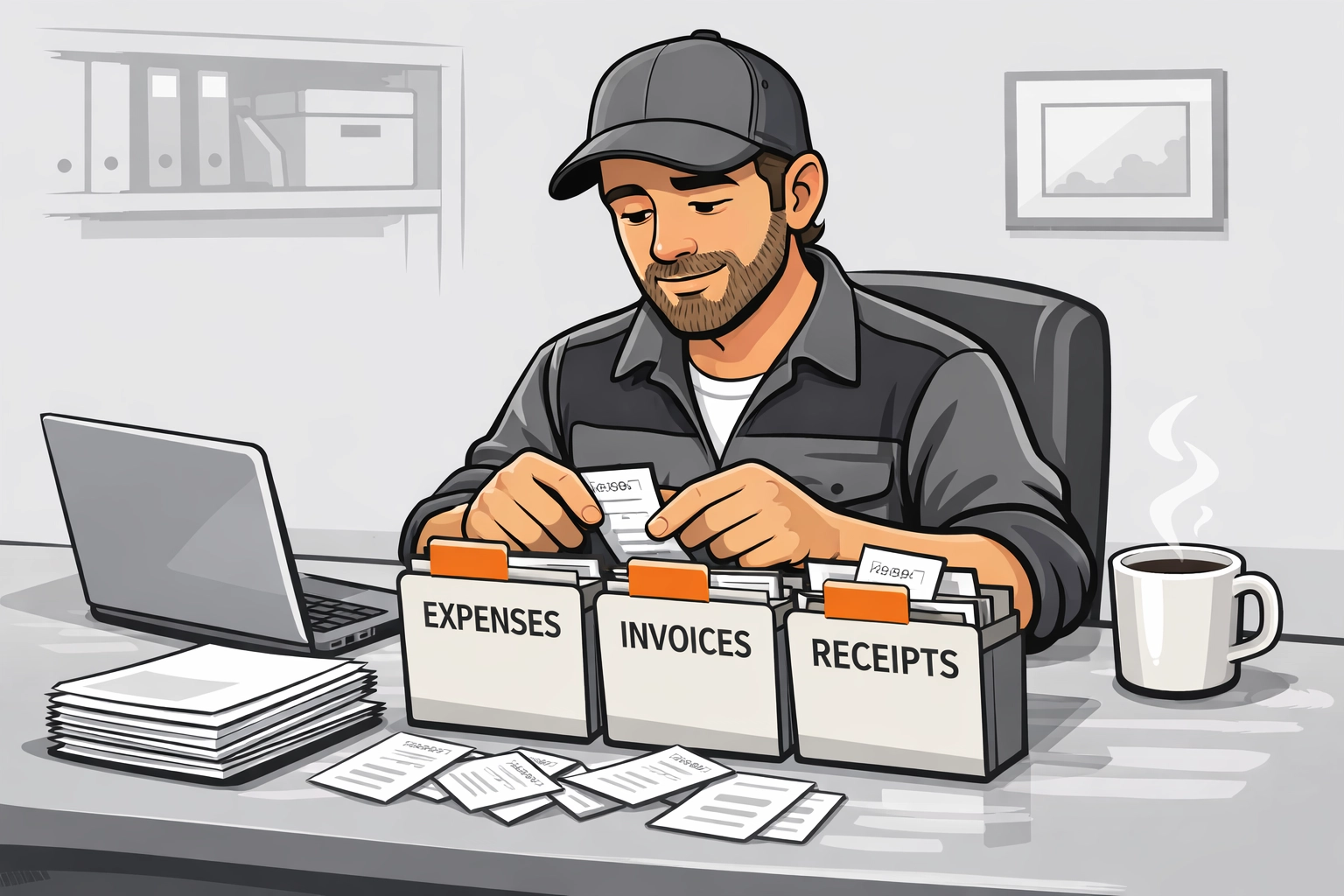
How to Avoid Problems: Keep every receipt, every statement, every invoice. HMRC doesn't accept vague claims like "I spent loads on tools." They want hard evidence.

6. Maximizing Your CIS Refund: Don't Leave Money Behind
Here's where most subbies mess up: they don't claim all their allowable expenses.
Common business expenses you can claim:
- Tools and equipment
- Protective clothing and gear
- Vehicle costs (fuel, insurance, repairs)
- Mileage (45p per mile for the first 10,000 miles)
- Professional fees and subscriptions
- Training and qualifications
- Phone and internet costs
- Accountancy fees
Every pound you claim in expenses reduces your taxable profit and increases your refund.
Tip: Review the last four years. If you haven't claimed refunds for previous tax years, you can still do it now. That could mean thousands of pounds coming back to you.
7. Common Mistakes That Cost You Money
Filing Too Early
Don't submit your return before 5 April. HMRC's records won't be complete, which means your refund calculation will be wrong.
Not Keeping Proper Records
"I think I spent about £500 on tools" doesn't cut it. Keep receipts, invoices, and bank statements organized throughout the year.
Missing Contractor Statements
Collect your Payment and Deduction Statements from every contractor you worked for during the tax year. Missing even one can reduce your refund.
Not Claiming All Allowable Expenses
Too many subbies only claim the obvious stuff. Dig deeper: mileage, phone costs, and professional fees all add up.
How to Avoid It: Set up a simple filing system at the start of the year. One folder for receipts, one for statements. Future you will thank present you.
8. What Happens After You Submit Your Claim
Once you've submitted your claim through Self-Assessment or the online form, HMRC processes it and calculates your refund.
Timelines vary, but most refunds are processed within a few weeks if everything is in order.
You can check the status by contacting HMRC or logging into your online account.
If you need to amend your claim:
- Use the online form or submit a revised claim by post
- Mark it as 'revised claim'
- State the full amount you're claiming
- Reference your original claim
The Bottom Line: Claiming Your CIS Refund Is Non-Negotiable
Claiming your CIS refund isn't complicated, but it does require organization and attention to detail. The average subcontractor gets back £2,000 to £3,000 per year: money that's already yours.
Don't wait. Don't put it off. And don't leave thousands of pounds sitting with HMRC when it should be in your pocket.
Need help with claiming CIS refund or CIS self-assessment support? At CIS Assist, we specialize in helping construction professionals maximize their returns with no upfront fees. Our team knows HMRC inside out and can handle everything from registration to refund claims. Get in touch today and let's get your money back where it belongs.